Unlocking Interscapular Pain
Without Digging Harder
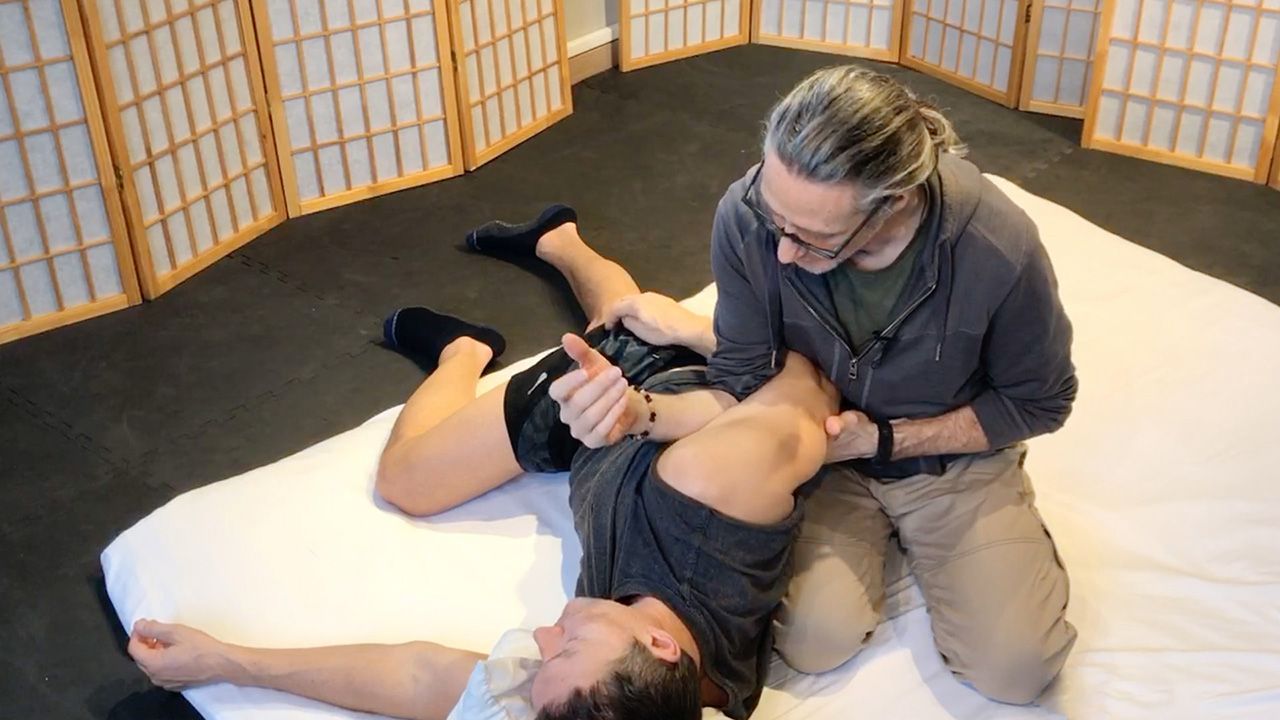
The following short, four-video clinical demonstration shows you how to solve stubborn interscapular tension and pain by treating the “hidden key” most therapists miss—rather than chasing the symptomatic tissue alone.
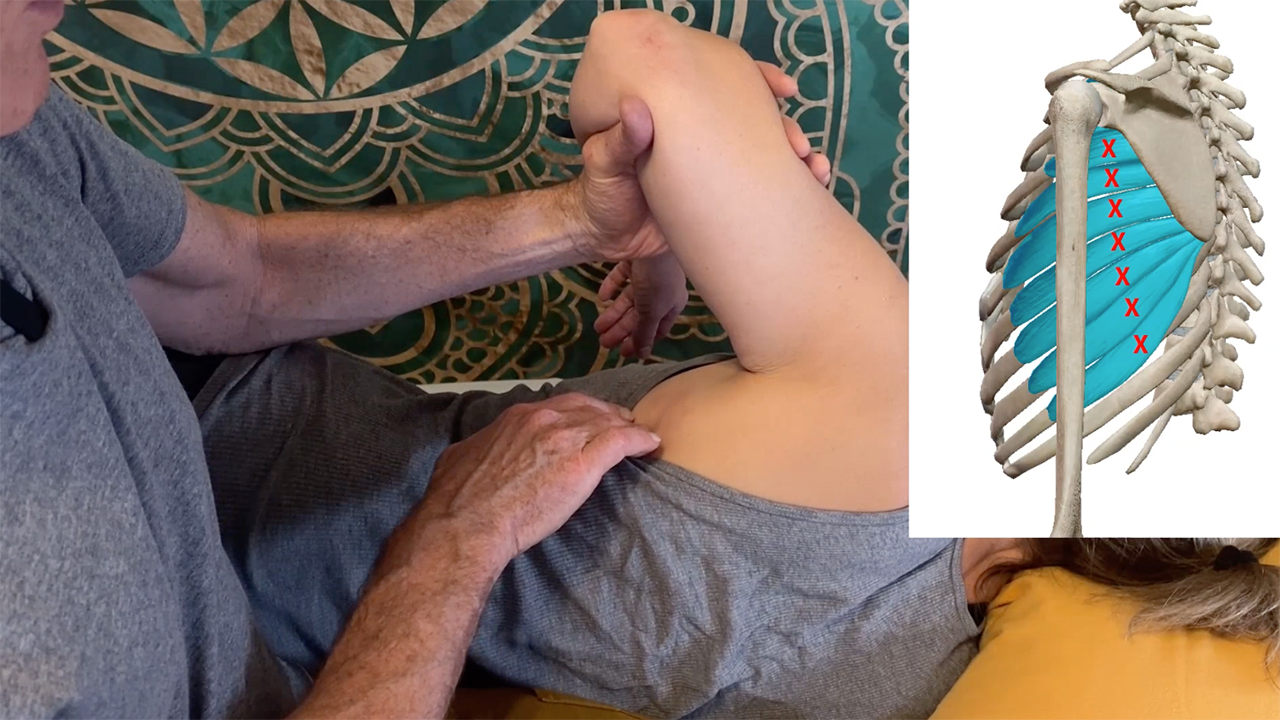
The serratus anterior is rarely assessed or treated, yet it often plays a decisive role in stubborn interscapular and shoulder pain.
For Massage & Stretch Therapists
This demonstration is for practitioners who regularly work with neck, shoulder, and upper-back complaints and have noticed that:
- Interscapular tissue often feels dense, guarded, or unresponsive
- Results plateau despite solid technique and pressure
- Clients feel temporary relief, then return with the same complaint
- Your hands, thumbs, or shoulders take the hit when you try to “do more”
The videos below show why this happens—and how changing treatment order often matters more than force, pressure, or digging deeper.
1 - Introduction
A brief explanation of the clinical problem this approach addresses and why interscapular work often plateaus when the antagonist is not included in the treatment strategy.
2 - Dramatic Before/After
A real client example showing rapid changes in shoulder motion and symptom presentation after applying an antagonist-based treatment cycle rather than working the interscapular region in isolation.
3 - Primary Treatment: Antagonist-Driven Release
A full treatment demonstration showing how interscapular muscles are effectively released by pairing direct work with a specific antagonist treatment cycle, rather than relying on local pressure alone.
This sequence illustrates:
- Why the interscapular region often resists change
- How treating the opposing muscle alters tone and control
- How sequencing matters more than force
This is shown in real time, with minimal edits.
4 - Treatment Cycle With Vibration
An optional variation of the same treatment cycle using vibration to enhance neuromuscular response.
This is not required but can accelerate results.
About the Instructor
Doug Ringwald is a pain-focused bodywork and movement educator and senior instructor in the Coaching The Body® system.
He works with pain clients and trains massage and stretch therapists to resolve stubborn pain patterns using neuromuscular sequencing strategies that prioritize results without overworking the therapist’s body.
Want to Practice This Hands-On?
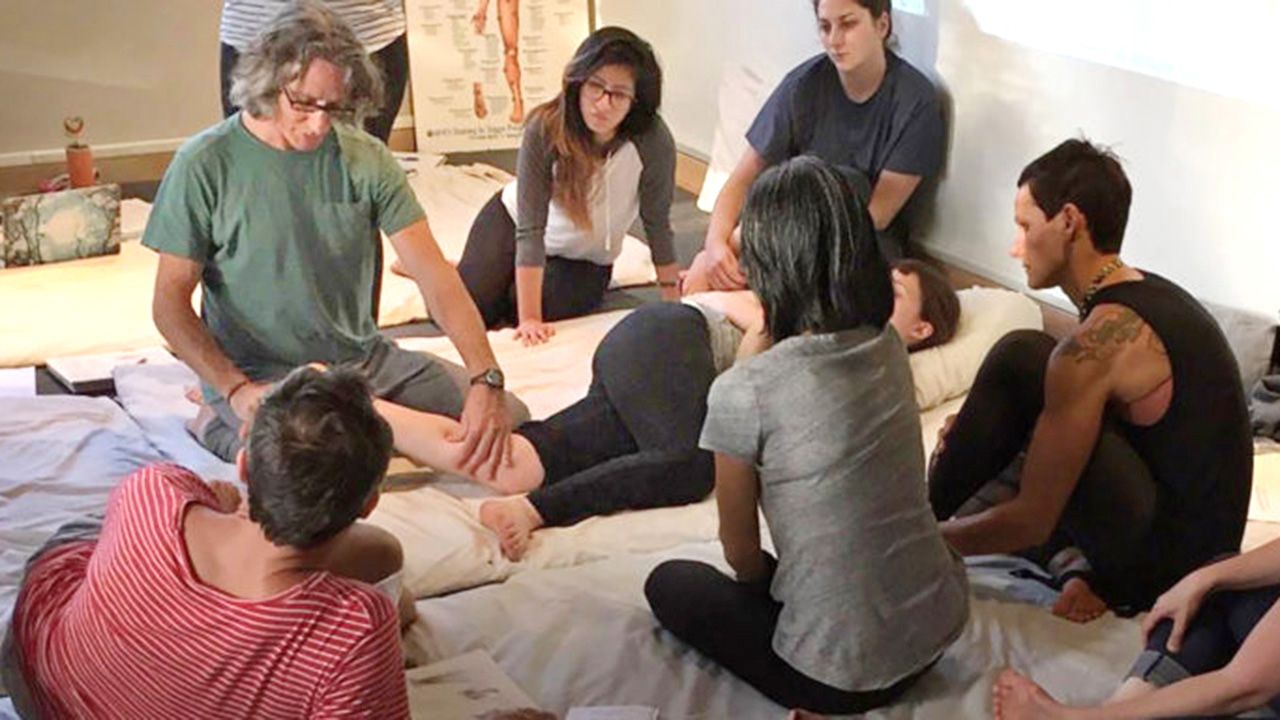
If this sequencing approach makes sense and you want to apply it confidently with real clients—not just watch a demo—I’m teaching a live, in-person Upper Core training focused on:
- Interscapular pain that doesn’t respond to local work
- Effective neck and shoulder pain protocols
- Antagonist-based sequencing strategies you can use immediately
- Getting better results without relying on force or overworking your body
This is a small, hands-on weekend course for working massage and stretch therapists.
Upper Core In-Person Training
Greenwood Village, CO | February 21-22 | Limited to 8 spots
Reserve Your Spot